
Oak Roots and Old Sewer Laterals in Fair Oaks Yards
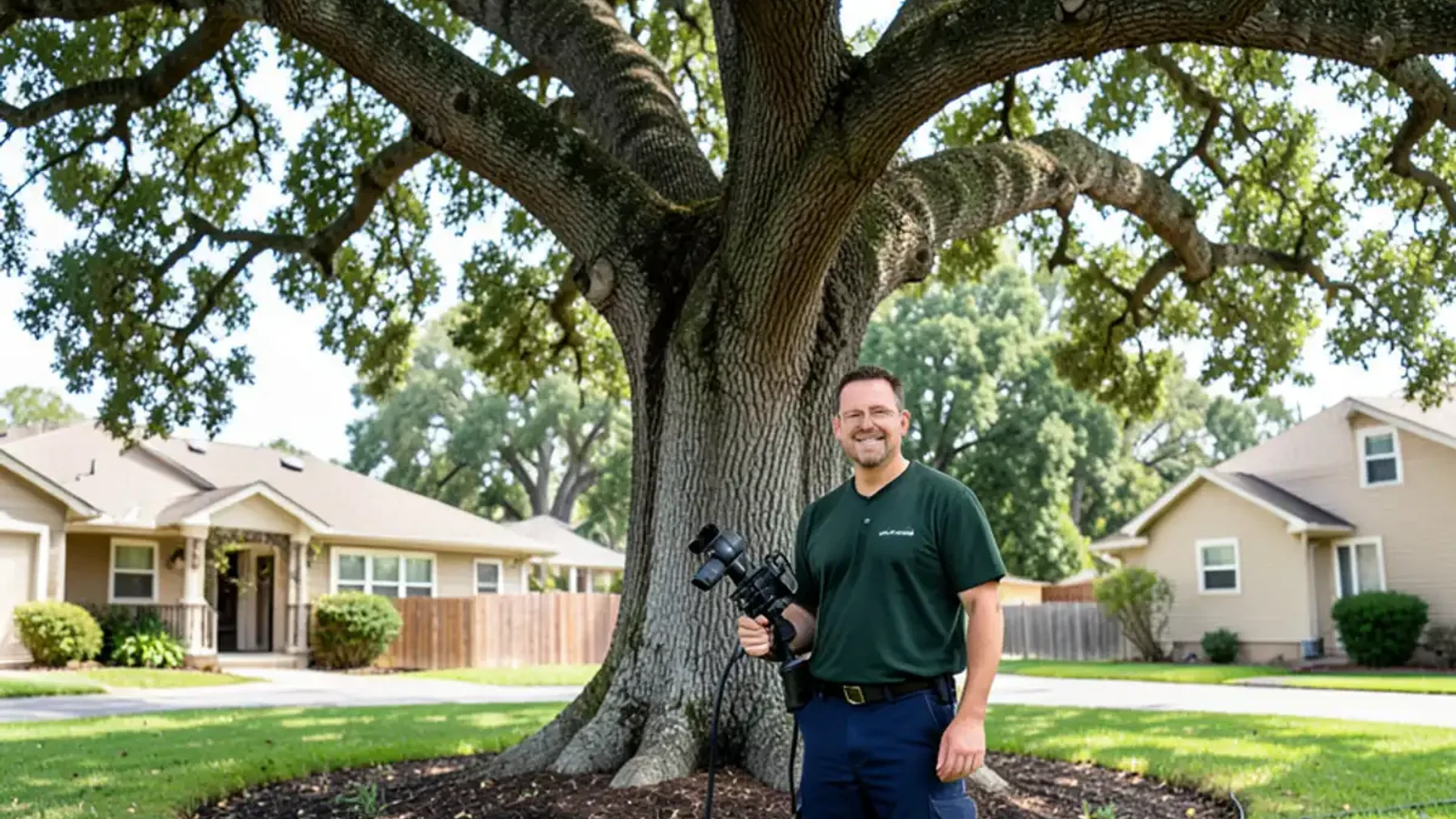
Tree roots infiltrate Fair Oaks sewer lines because mature valley oaks and interior live oaks seek moisture vapor leaking from brittle vitrified clay pipe joints and cracked cast-iron seams during hot California summers. Once microscopic root hairs enter a sewer line, they feed on water and organic nutrients, rapidly expanding into dense fibrous root masses that catch toilet paper and cause whole-house sewer backups. The only permanent solution to root intrusion is scouring the lateral with 4,000 PSI hydro jetting followed by trenchless HDPE pipe bursting, which replaces the jointed pipe with a continuous, 100-year joint-free lateral that roots cannot penetrate.
Dealing with oak roots in sewer lines in Fair Oaks, CA? Discover how tree roots enter clay joints and how hydro jetting clears them. Call (207) 419-2600.
- ✓Gurgling noises coming from toilets or tub drains after running laundry
- ✓Slow-draining showers or sinks on the lowest level of the home
- ✓Foul sewer gas odors near exterior landscape cleanouts or foundation perimeter
- ✓Toilet water levels fluctuating unexpectedly during windy days or heavy usage
- ✓Unusually lush, dark green patches of lawn growing directly above the sewer lateral line
- ✓Frequent localized drain backups occurring every 3 to 6 months after snaking
| Method | Root Clearance Level | Impact on Pipe Walls | Time Until Next Backup | Long-Term Permanence |
|---|---|---|---|---|
| Mechanical Cable Snaking | Punches small 2-3 inch hole | Scratches pipe; can crack clay | 3 to 6 months | Temporary relief only |
| Chemical Copper Sulfate Rooters | Kills surface root tips only | Chemical runoff risks; toxic | 4 to 8 months | Incomplete; does not seal joints |
| 4,000 PSI Hydro Jetting | 100% scours roots flush to wall | Safe for sound clay and cast iron | 12 to 24 months | Optimal maintenance clearing |
| Trenchless HDPE Pipe Bursting | Completely eliminates all joints | Replaces old pipe with 200 PSI HDPE | 50 to 100+ years | Permanent root-proof replacement |
Need a Fair Oaks Plumber on Site?
Call (207) 419-2600 to talk directly with our team at 10100 Fair Oaks Blvd.
The biology of root intrusion into vitrified clay pipes
Fair Oaks is renowned for its majestic heritage Valley Oaks (Quercus lobata) and Interior Live Oaks (Quercus wislizeni) that define the community's rural-suburban character. A mature oak tree can absorb hundreds of gallons of water per day during the arid Sacramento Valley summer months. Contrary to common belief, tree root systems do not grow downward into deep bedrock; the vast majority of water-seeking feeder roots remain concentrated in the top 18 to 36 inches of soil, spreading horizontally two to three times beyond the perimeter of the tree's outer branch dripline. Roots grow along moisture and nutrient gradients through a biological process known as hydrotropism. When an underground sewer lateral carries warm wastewater, microscopic condensation vapors escape through pipe joints, creating an underground humidity plume. Feeder root hairs, measuring mere fractions of a millimeter in diameter, navigate directly toward this moisture source, slipping through hairline cracks in mortar packing and penetrating the sewer pipe interior.
Vulnerable lateral materials in postwar Fair Oaks neighborhoods
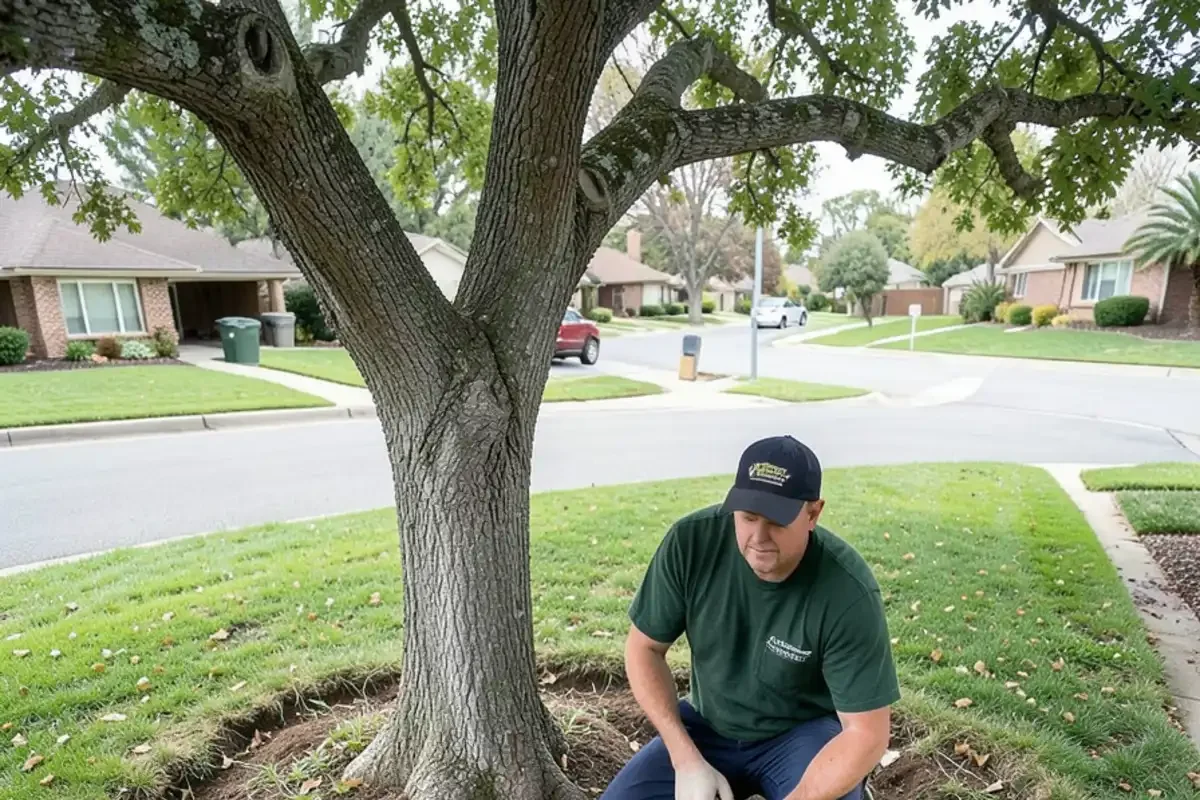
The severity of root intrusion in Fair Oaks correlates directly with the construction era of local residential neighborhoods. Most homes built between 1945 and 1975—particularly throughout established subdivisions along Fair Oaks Blvd, Sunset Ave, and surrounding the historic Village—were plumbed with vitrified clay pipe (VCP) or cast-iron sewer laterals. Vitrified clay pipe was manufactured in short three- to five-foot sections connected by hub-and-spigot joints sealed with tar, oakum, or rigid Portland cement mortar. Over five decades of seasonal soil expansion and contraction, minor seismic settling, and heavy tree root weight, this brittle mortar cracks and washes away. In some 1950s parcels, contractors installed bituminous fiber pipe (commonly known as Orangeburg), composed of wood pulp fibers impregnated with coal tar pitch. Orangeburg pipe possesses virtually zero structural resistance against aggressive oak roots; as roots penetrate, the pipe walls delaminate, flatten into oval cross-sections, and collapse entirely.
Why mechanical snaking fails to stop recurring backups
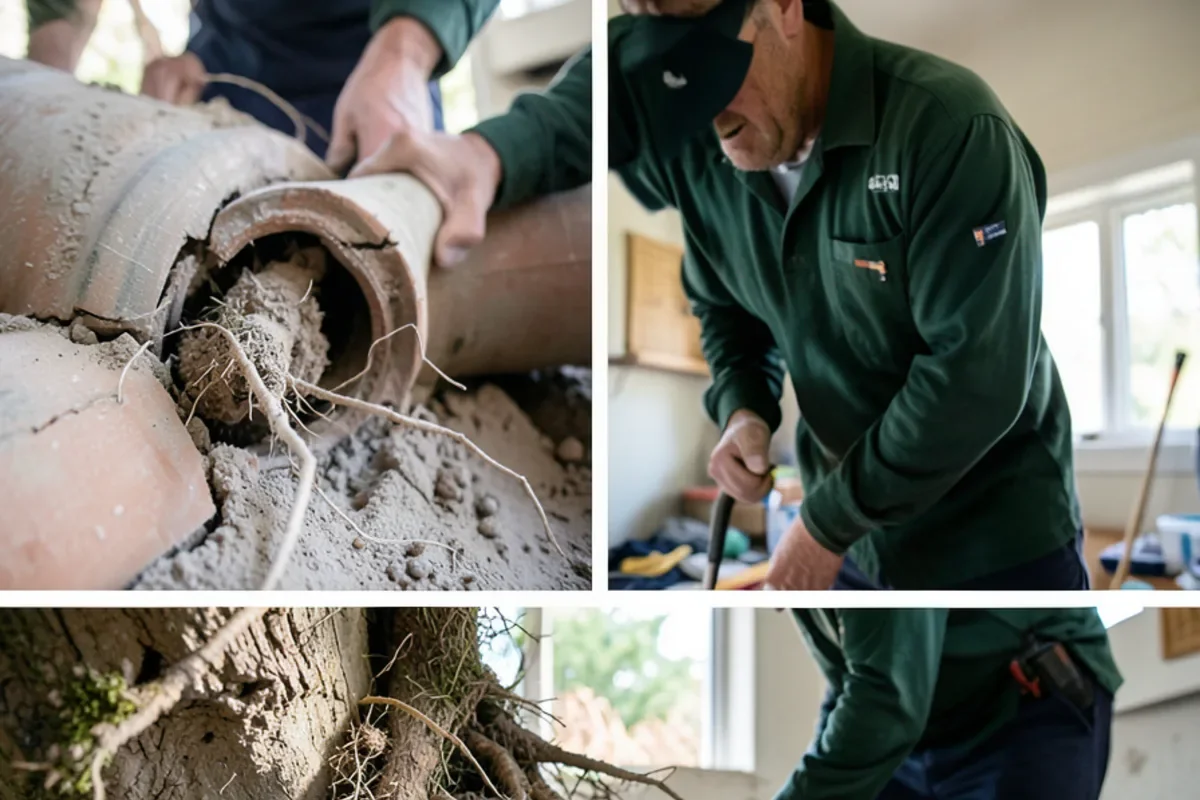
When tree roots cause a sewer lateral obstruction, the standard emergency reaction is hiring a drain cleaning company to run a mechanical rooter snake through an exterior cleanout. While a motorized steel cable with a spinning C-cutter or spade blade can punch a two- to three-inch hole through the center of the root mass to allow accumulated wastewater to drain, it leaves the thick perimeter of the root system firmly anchored to the pipe walls. Inside the warm, nutrient-dense environment of a residential sewer line, pruning roots mechanically actually stimulates accelerated vegetative growth, much like pruning a backyard hedge. Within three to six months, new fibrous root shoots choke the lateral once again, snagging toilet paper and kitchen grease until another catastrophic sewage backup floods low-lying bathroom shower pans.
Hydro jetting and trenchless pipe bursting: the permanent solution
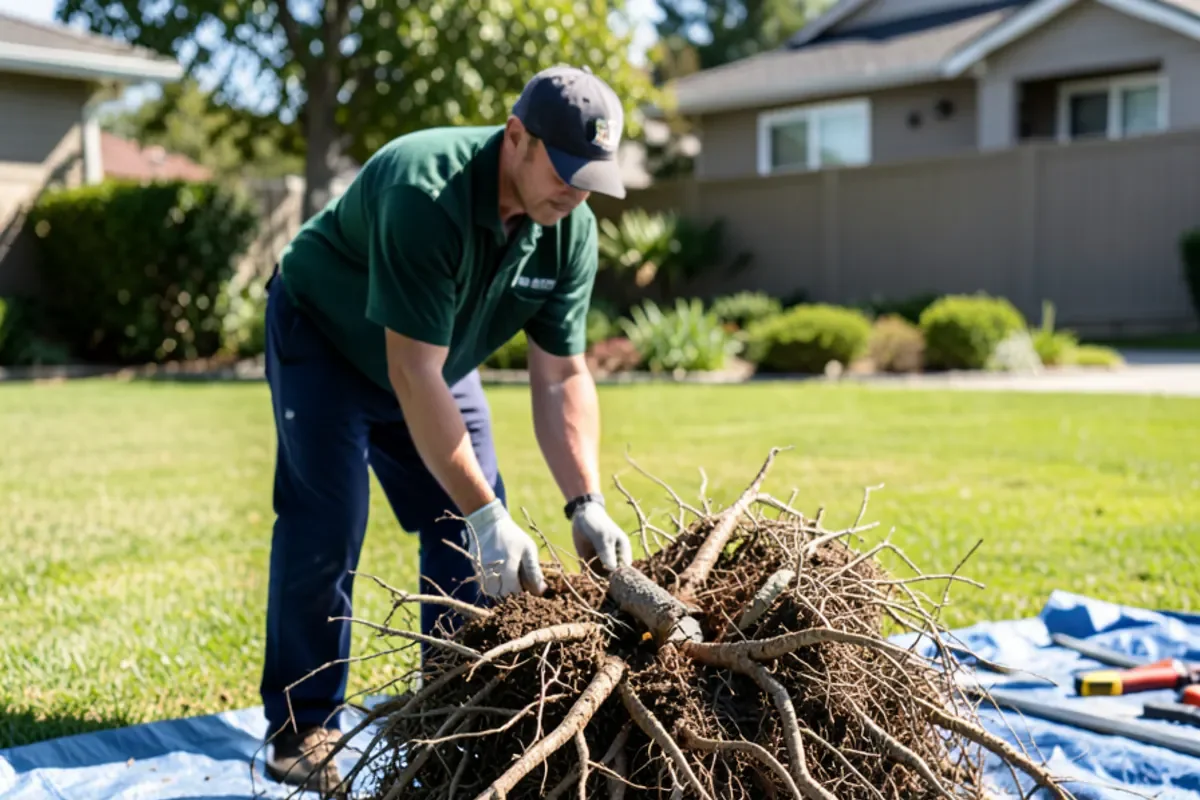
To permanently resolve chronic root intrusions, modern plumbing engineering relies on two proven methodologies. First, commercial-grade 4,000 PSI hydro jetting delivers high-velocity water streams through specialized rotating nozzles that shave root masses flush against the interior pipe wall while flushing decades of accumulated sludge into the municipal sewer main. However, because cleaned joints remain exposed to future root entry, permanent rehabilitation requires trenchless pipe bursting. Pipe bursting requires only two small access excavations: an insertion pit near the foundation and a receiving pit at the property line cleanout. A high-tensile steel cable pulls a hardened conical bursting head through the deteriorating clay or cast-iron pipe, fracturing the old line outward into the surrounding soil while simultaneously pulling a continuous, joint-free high-density polyethylene (HDPE) pipe into place. With zero mechanical joints, continuous HDPE lateral lines provide an impervious, 100-year barrier that tree roots cannot penetrate.
Ownership boundaries: SacSewer vs. homeowner responsibility
Navigating sewer repairs requires understanding municipal jurisdiction across northeast Sacramento County. In unincorporated Fair Oaks, sanitary sewer collection is operated by the Sacramento Area Sewer District (SacSewer). Under SacSewer regional ordinances, private property owners maintain sole financial responsibility for the upper sewer lateral, which encompasses the entire pipe length running from the home's exterior plumbing foundation out to the property boundary or sidewalk two-way cleanout. SacSewer maintains the lower lateral (running from the property line cleanout into the municipal main beneath the street) and the primary collector mains. When performing sewer lateral replacements, all work must be permitted through the Sacramento County Building Permits and Inspection Division via the Accela online portal, and all trenchless HDPE connections must conform strictly to SacSewer engineering standards.
"Cutting down an oak tree will not stop a sewer lateral backup. Tree root systems remain biologically active for up to two years after a tree is felled, seeking moisture with even greater desperation. The only reliable solution is installing a jointless HDPE sewer lateral that locks roots out permanently."
— Fair Oaks Plumbing Services Field Operations Team
Frequently Asked Questions
Will cutting or clearing sewer roots harm our Fair Oaks heritage oak tree?
No. Clearing root intrusions from inside your sewer lateral or shearing roots at the pipe joint does not harm mature oak trees. Sewer roots represent less than two percent of a mature oak tree's total root network, which gathers the vast majority of its water and nutrients from the upper two to four feet of surrounding soil.
How often will oak roots grow back into an unlined clay sewer pipe?
If roots are cleared with a mechanical snake, they typically regrow and cause a secondary clog within 3 to 6 months. High-pressure hydro jetting extends the clog-free period to 12 to 24 months. Trenchless HDPE pipe bursting eliminates the joints permanently, stopping root growth for 50 to 100 years.
Does homeowner's insurance cover oak root sewer line repairs?
Standard homeowners insurance policies generally exclude damage caused by tree root intrusion, wear-and-tear, or aging underground pipes. However, many homeowners add an optional 'Service Line Protection' endorsement to their policy, which can cover up to $10,000 for trenchless sewer line repairs or replacement.
Who is responsible for the sewer line under the street in Fair Oaks?
In unincorporated Sacramento County, property owners are responsible for the upper sewer lateral from the building foundation to the property boundary or two-way cleanout. The Sacramento Area Sewer District (SacSewer) is responsible for maintaining the lower lateral connecting from the property cleanout into the main sewer collector in the public right-of-way.
Plumbing Services in Fair Oaks Technical Team
Fair Oaks Plumbing Services • Local Plumbing Contractor
Physical shop: 10100 Fair Oaks Blvd, Fair Oaks, CA 95628
Related Plumbing Services
Nearby Communities Served
Questions About This Guide?
Call (207) 419-2600 to discuss your home's water heater or plumbing system with our local plumbers.